T: 01273 957 726 / E: [email protected]

Renewable projects provide 8,500 green jobs boost

Words: Austin Macauley / Source: Localgov

The government has given the go-ahead to eight renewable electricity projects that are expected to support up to 8,500 new jobs.

A mix of wind farms and biomass conversion, they will draw in £12bn of private investment and generate enough power for three million homes by 2020.

They form part of the government’s Electricity Market Reform programme, an initiative aimed at encouraging investment in low-carbon electricity.

8 eco projects

The eight projects include offshore wind farms at Outer Moray Firth in Scotland, Liverpool Bay, The Wash in Norfolk, the North Sea off the Yorkshire coast and the Irish Sea off the coast of Cumbria. Biomass plants are planned in Selby, Ashington and Middlesbrough.

Energy and climate change secretary Edward Davey said the contracts marked ‘a new stage in Britain’s green energy investment boom’.

He added: ‘These are the first investments from our reforms to build the world’s first low carbon electricity market – reforms which will see competition and markets attract tens of billions of pounds of vital energy investment whilst reducing the costs of clean energy to consumers.’

Beyond greenwash to greatness: big brands are turning into society’s problem-solvers

Words: Gemma Adams ( / Source: Forum For The Future

The Economist Intelligence Unit says social marketing is a top five trend for 2014 and new research says that purpose-driven messages live longest in consumers’ minds. If your brand wants to stand-up and stand-out with purpose it’s time to re-set your ‘guff’ detector. An era of brand trouble-shooters is here and they’re putting greenwash to shame.

Big global brands like Nike and Unilever are creating rather than waiting for a better world, and are stepping outside their traditional territories to do it. They are embracing the future with imaginative, relevant and (only time will tell) powerful results, and their consumers and competitors are responding. Can established brands be both successful and revolutionary? They are showing us how it can be done, and are redefining greenwash as they go.

The social marketing trend is upon us. Les Binet and Peter Field’s Marketing in the era of Accountability recommends brands move away from one-message-marketing and instead try to connect with consumers on a more emotional level. They say “emotionally based campaigns… outperform rational campaigns on every single business measure,” which opens the door for communicating the environmental and social messages that might previously have been considered ‘too much’: cue Innocent’s Chain of Good TV advert, Kenco’s Collect-to-Give scheme and Rainforest Alliance’s The Man Behind your Chocolate

Now add into that picture that Apple and Chipotle are talking to investors about long-term risks they haven’t recognised before; creating ‘safe ground’ for others to follow. Chipotle named climate change as a material risk in its SEC filing, explaining: “Increasing weather volatility or other long-term changes in global weather patterns, including any changes associated with global climate change, could have a significant impact on the price or availability of some of our ingredients.” Apple chief executive Tim Cook told investors who don’t agree with the company’s commitments to renewable energy among other sustainability issues they should divest.

Unilever and Nike put this together and, as a result, are making strong, direct links between their long-term business strategy and their brand strategies. For the first time, they are using consumer-facing communications to drive their future as well as their immediate success. They are serious about changing their business models to adjust to long-term trends, and their brand-led initiatives reflect it.

Behind the flourishing innovation in sports apparel – Puma’s InCycle cradle-to-cradle footwear andClever Little Bag, Nike’s Flyknit, Puma’s Bring me Back and Nike’s Reuse a Shoe – I’m fascinated by Nike’s trouble-shooting tactics to scale-up the market for sustainable materials. Why take this on? Nike has a business strategy that wants to ward off the rising cost of commodities like cotton and rubber by adopting closed-loop manufacturing (creating new Nike products from materials reclaimed from old Nike products). For a first-mover, the innovation costs are high so Nike is using brand-led initiatives like the Making App and Nike Makers to encourage designers to choose sustainable materials to increase demand for by them, and Launch 2020 to accelerate new material technologies to market. Nike is bringing a circular economy closer and is building brand difference along the way.

Sustainable living is another trouble-shooting hotspot for brands. Unilever’s biggest environmental impacts are generated when their products are used, and its sees that consumers will also increasingly be hit by the higher prices of goods and utilities. Arguably uncool, Unilever, B&Q and Coca Cola are using personality, open innovation and a sense of community to encourage us to adopt energy, water and waste-saving habits. Project Sunlight is a portal that shows how different Unilever product brands want to help us live more sustainable life-styles. Just as Coca Cola is researching how to nudge people into recycling through Recycle for the Future, Unilever’sSustainAbility Challenge has shed light on how it can help households to compost more and use less hot water. Unilever is helping us to change our life-styles for the better, and believes consumers will reward them with long-term loyalty.

In 2014, we’ll see teams of brand problem-solvers working together to create a new conversation about energy to help boost home energy efficiency, and to brew a tasty future for tea.

These first-mover brands are lifting the bar for greenwashing or ethics-washing which are as much about framing as they are about specific claims: a point brilliantly made by Dissolve’s Generic Brand Video. According to Greenpeace, as long as half-measures are sold as full solutions, corporate actions, no matter how sincere, are nothing more than sophisticated greenwashing. While there’s still a way to go to meet this, in 2014 brands making environmental and social claims without an ambitious vision to back them up are on shaky ground. They risk being seen as weak, or worse, as pacifying consumers by offering platitudes instead of innovation.

Can the UN get 100 banks to sign up to Green Bonds by September?

Words by Rebecca Cooke / Source: Trillion Fund

Yesterday it was announced that a further twelve banks would be committing to the Green Bond Principles in a move to encourage more transparency and disclosure in the green bonds market.

The latest twelve banks to agree to the Principles now means that there are 25 banks signed up to the deal, giving hope that the total could breach the 100 mark by the UN Secretary General’s Climate Change Summit on September 23 this year.

The Green Bond Principles were initially published in January by thirteen banks, which agreed to rules on disclosing, managing and reporting to investors and issuers what happens to the capital in a Green Bond. The principles also help to accurately evaluate the environmental impacts of green bond investment outlined in this governance framework.

The original Principles were set up by four founding multi-national banks, Bank of America Merrill Lynch, Citi, Crédit Agricole CIB, and JPMorgan Chase, with a further nine banks signing up to the principles as the first signatories.

The latest signatories are: Barclays, BMO Financial Group, Credit Suisse AG, DNB, DZ BANK AG, ING, Lloyds Bank, Mitsubishi UFJ Securities, Nomura, RBC Capital Markets, Santander, and Société Générale.

The inception of the Green Bond Principles was welcomed by leading ethical investing figures including Climate Bonds Initiative chief executive Sean Kidney who said: “The banks behind the Principles should be applauded for working together to ensure standard practices in the issuance of green bonds, in particular around transparency for investors and reporting on the use of proceeds.”

He added: “Common standards are essential for growing bond markets and preventing greenwashing scandals that would damage the reputation of bond issuers and investors alike. The easier it is for investors to compare apples with apples, the faster this market will grow. This is especially the case with corporate green bonds, which will be the big growth area.”

Ethical investing has gathered momentum in mainstream banking over recent years with more emphasis being importance being placed on transparency in their investments.

The news of the latest Green Bond Principle signatories comes after fossil fuel giant Exxon Mobil agreed last month to disclose their carbon asset risk after coming under pressure from investors.

Like this content? Then follow us on Twitter or register for a FREE ticket for the Eco Technology Show on the 26th – 27th June, The Brighton Centre by clicking here. #ecotechshow for an instant RT of your eco news

EV Market Fully Charged and Ready to Grow!

A Navigant Research forecast predicts that global sales of plug-in electric vehicles will grow by 86% in 2014, bringing the total of plug-in electric vehicle stock on the world's roads to more than 700,000 by the end of 2014.

Although Britain lags behind the leaders, Japan and the USA, our EV market is growing. During 2013, a total of 3,584 plug-in electric cars were registered in the UK, up 59% from 2012. Research conducted by the retailer IKEA revealed that one in six of us would be encouraged to switch to an electric car if more charging points were available across the UK and so, as awareness of the growing network of charging points and options increases, the market is poised to take off and electric vehicles should be part of any business’ green agenda.

It is no surprise, therefore, that the electric vehicle section of the third Eco Technology Show in Brighton this June features many of the latest vehicles. Fleetdrive Electric, the UK’s leading specialist provider of low emission business vehicles, will be explaining the logistics of going electric and Chandlers BMW will be showing the latest ultra-efficient hybrid vehicles, the i3 and new for 2014, the i8. Show visitors will also be able to test drive a range of low emission cars and electric bikes along Brighton’s seafront.

It is expected that most charging will be performed at home, during (off-peak) night time hours. Energy in Buildings and Industry has teamed up with South Downs Solar to offer to install an intelligent Mode 3 home charger, including installation by a qualified electrician, who will conduct a house survey to ensure that the wiring will safety support the relatively long periods of charging.

To enter the free draw just register at www.ecotechnologyshow.co.uk and enter EiBi when asked how you heard about the Show.

The Eco Technology Show will be open from 9.30am-5pm on Thursday 26 June and 9.30am-4.30pm on Friday 27 June. Registration is free. Further information can be found on the website www.ecotechnologyshow.co.uk.

History of the Electric car in Pictures

In 1828, Ányos Jedlik, a Hungarian who invented an early type of electric motor, created a small model car powered by his new motor

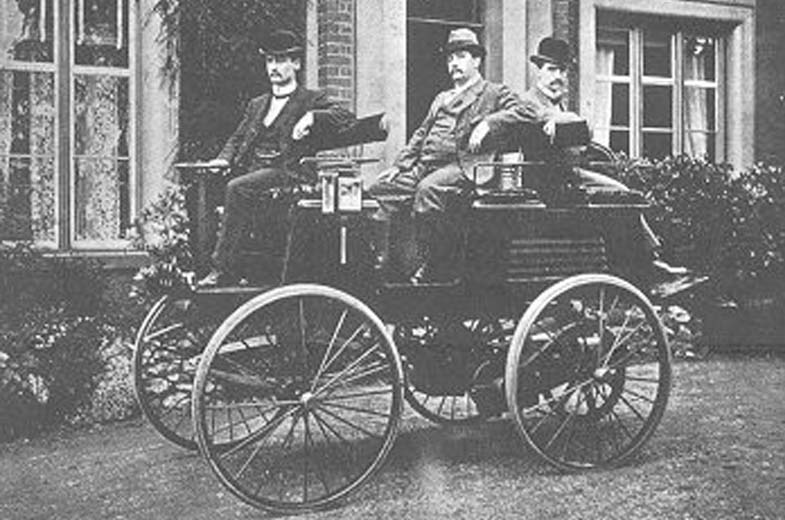
English inventor Thomas Parker, who was responsible for innovations such as electrifying the London Underground, overhead tramways in Liverpool and Birmingham, and the smokeless fuel coalite, built the first practical production electric car in London in 1884.
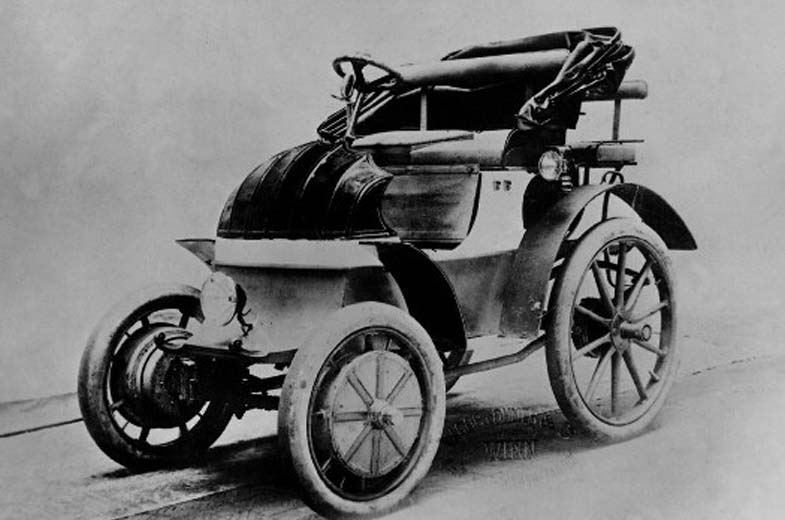
German carmaker Porsche reveals that the first vehicle designed by its founder, Ferdinand Porsche, was an electric car built in 1898
In 1911, the first gasoline-electric hybrid car was released by the Woods Motor Vehicle Company of Chicago. The hybrid was a commercial failure, proving to be too slow for its price, and too difficult to service
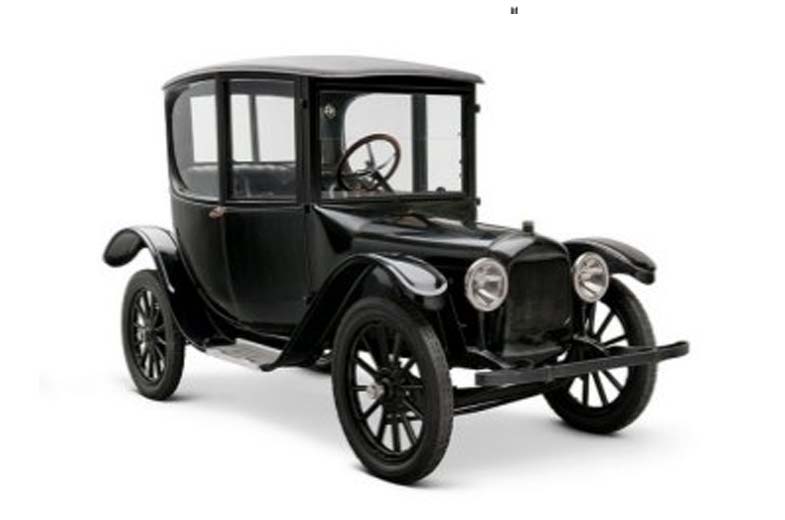
Detroit electric built EV cars for over 30 years, producing 13,000 vehicles between 1907 and 1939.
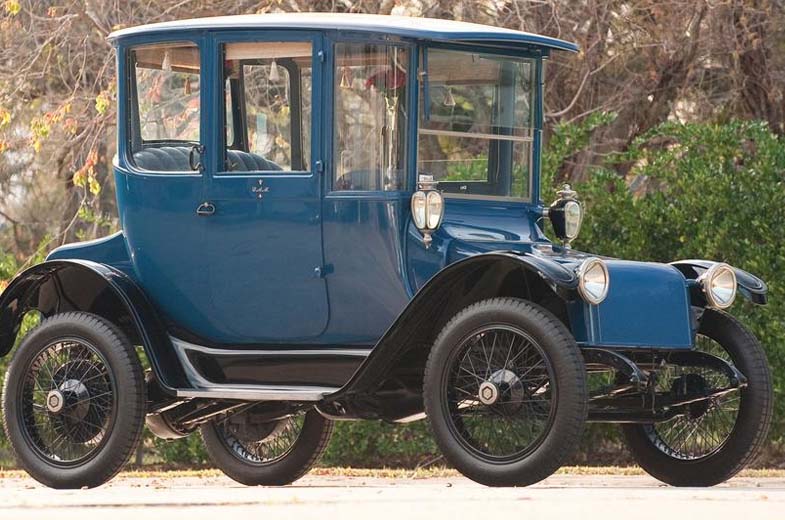
After a decline in electric vehicles due to cheap petrol, problems with range and electric cars selling for almost double the price of conventional petrol powered vehicles, the 1940’s saw fuel starved nations experiment with possible solutions. This car was made by French firm Breguet Aviation and had a range of over 65 kilometers.
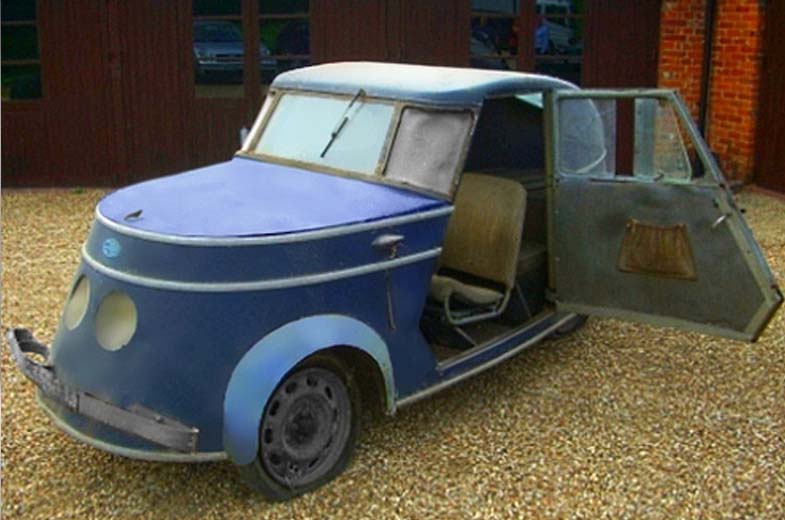
In 1959 the Henny Kilowatt was introduced to the American Market, it had a top speed of 60mph and a range of 60 miles. It was mainly sold to utility companies as more of a gimmick, an advert for electric utilities on wheels.
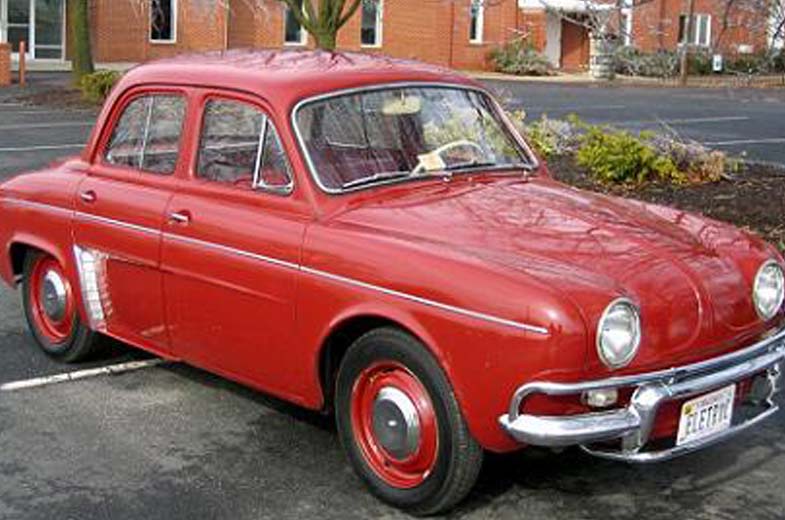
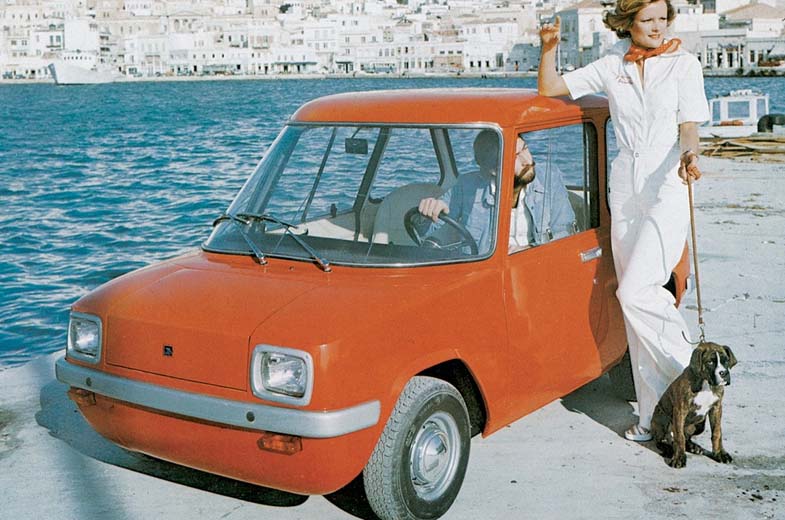
Built on the Isle of Wight and released in 1973, the Enfield 8000 is a cult classic, a 2-seater city car. The Enfield 8000 had a tubular chassis frame with aluminium body panels. It used suspension parts from the Hillman Imp, the doors were adapted from the Mini and the rear axle was derived from Reliant three-wheelers.
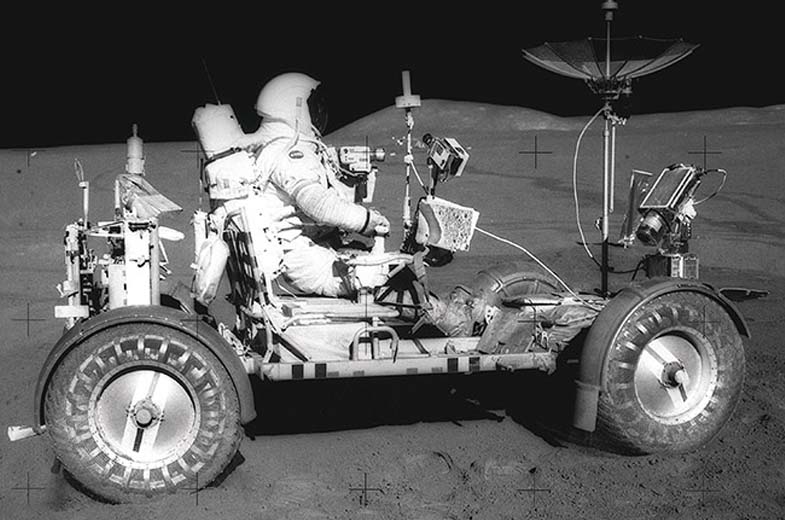
The electric car has had the distinction of being the first wheeled vehicle on the moon! The ‘Moon Buggy’ was developed by Boeing and Delco Electronics.
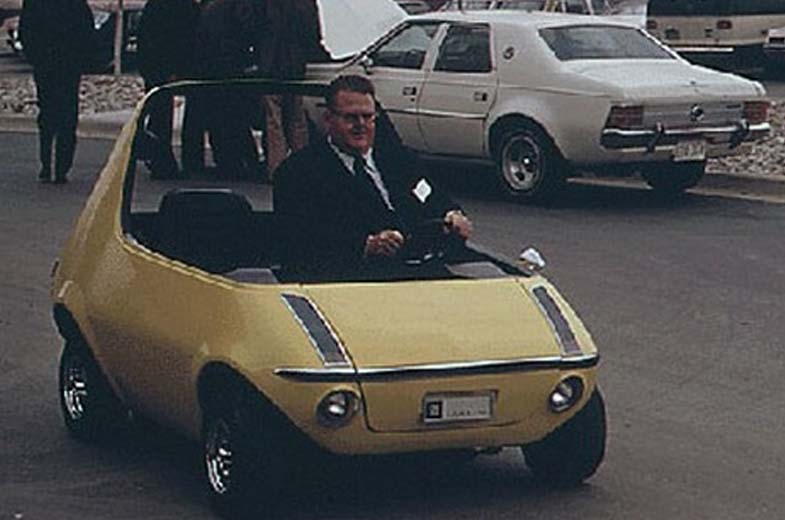
GM’s Urban Electric was not well known outside of auto shows and indeed never went into full-scale production. Released at the First Symposium On Low Pollution Power Systems Development in 1973 it had all the mod cons, including metallic paint and enough room for one and a half middle managers.
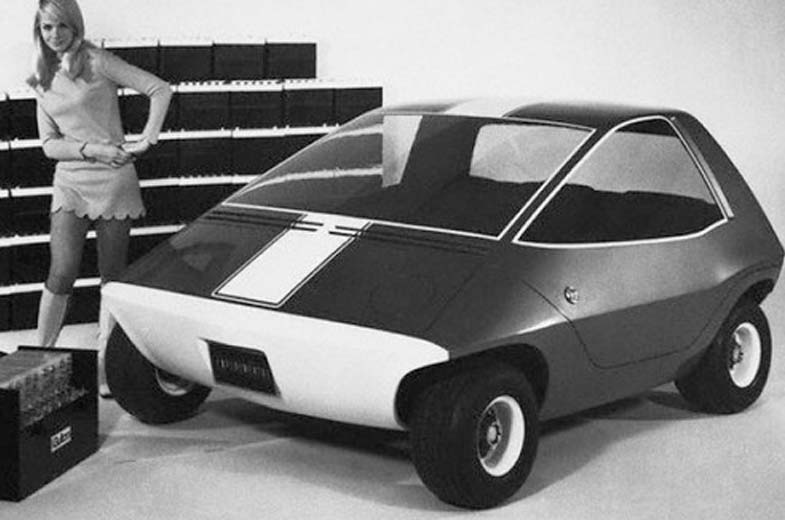
Built in 1977, this is yet another car that never made it out of the showrooms or from the look of it, Logans Run. Although it was one of the first cars designed to use energy regeneration braking and light weight lithium batteries. The passenger seats were inflatable and designed to be deflated for luggage space.
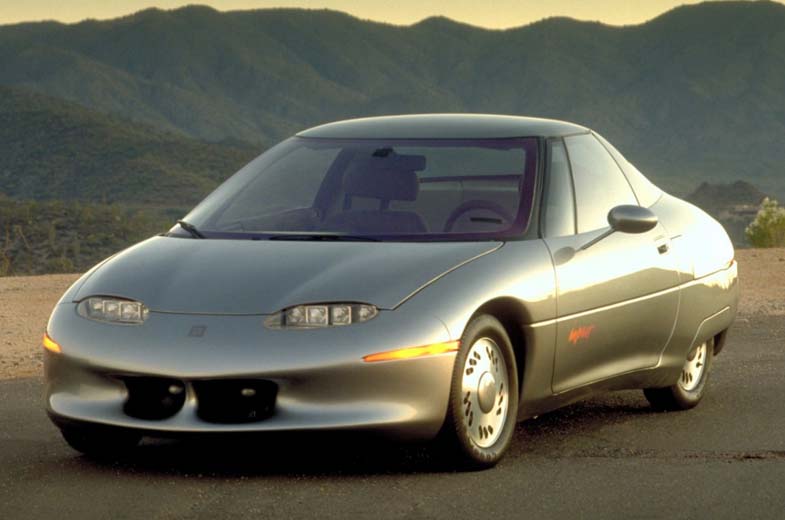
The EV1 by GM was the first mass-produced electric car of the modern era, built and made lease only to customers as an experiment to see if the EV market was buoyant enough for full scale World wide release. The car is shrouded in controversy and all but one working model is left, almost every car was recalled and crushed, even though owners had almost universally loved it. Electric car enthusiasts, environmental interest groups and former EV1 lessees accusing GM of self-sabotaging its electric car program to avoid potential losses in spare parts sales (sales forced by government regulations), while also blaming the oil industry for conspiring to keep electric cars off the road.
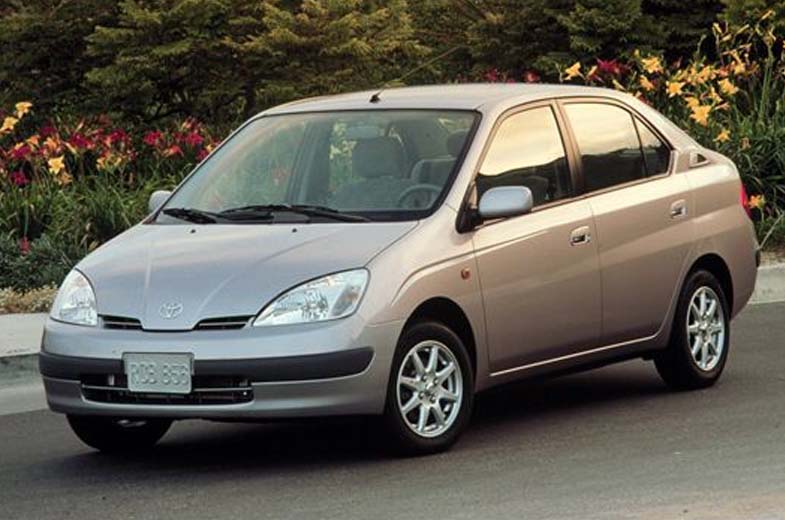
Released in Japan in 1997, the Toyota Prius was the first full hybrid low emission vehicle to make headlines as a main-stream option to the family gas-guzzler. High petrol prices in the US contributed to it selling over 3 million units by 2008 and the Prius is still a major player. In 2014, it was announced that it would be the first car to use wireless charging.
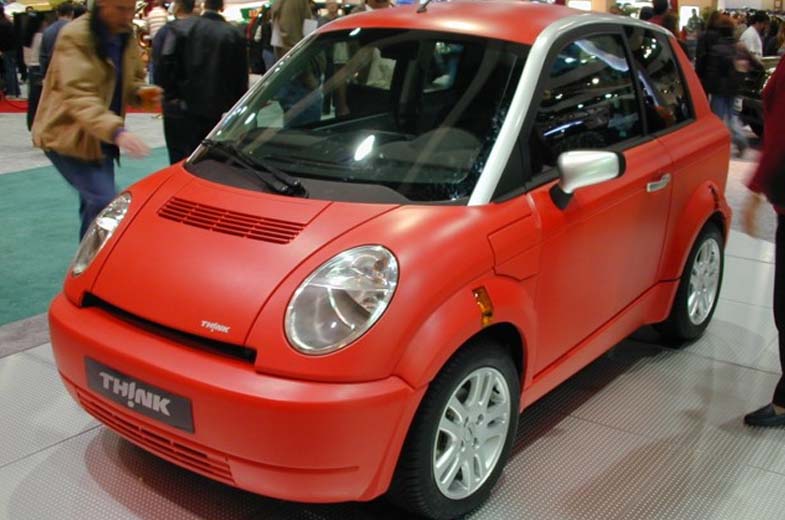
The Th!nk City is an electric city car that was produced by Norwegian carmaker Think Global, and production partner Valmet Automotive. It is a small two-seater/2+2-seater highway capable vehicle produced from 2008 to 2012, with a top speed of 110 kilometres per hour (68 mph), and an all-electric range of 160 kilometres (99 mi) on a full charge.
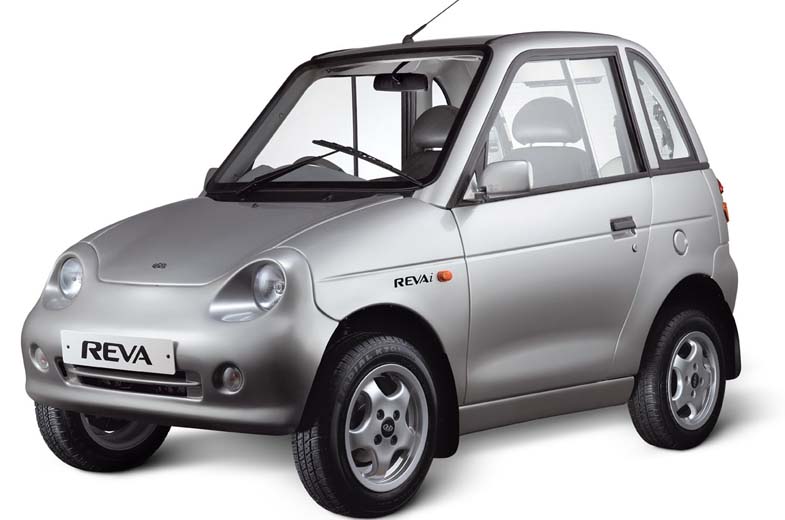
The REVAi or G-wiz as it’s known in the UK was manufactured by the Reva electric car company, this Indian manufacturer was named one of the top 50 most innovative companies of 2013.
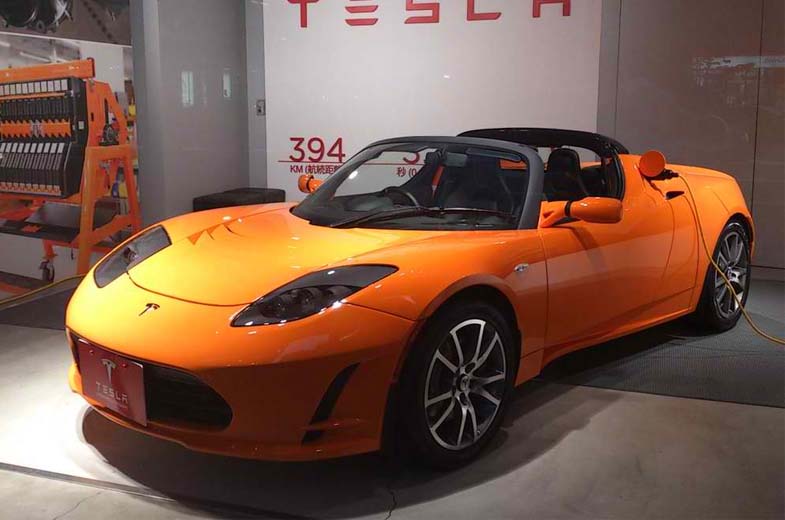
This was the game changer, in 2009 Tesla released it’s Roadster, the electric car would no longer look like a milk float – it was fast, looked beautiful and had the kind of range that made petrol heads quake in their boots.
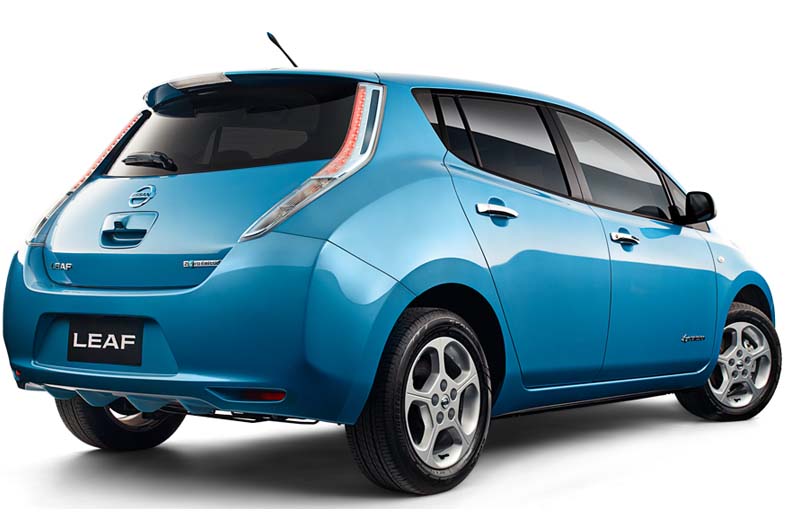
The Nissan LEAF, an acronym for Leading, Environmentally friendly, Affordable, Family car, released in 2010 it’s the world's best selling highway-capable all-electric car ever created. Global sales totaled 100,000 Leafs by mid January 2014, representing a 45% market share of worldwide pure electric vehicles sold since 2010. Winning a number of high profile awards, the car is great example of an ‘everyday’ EV.
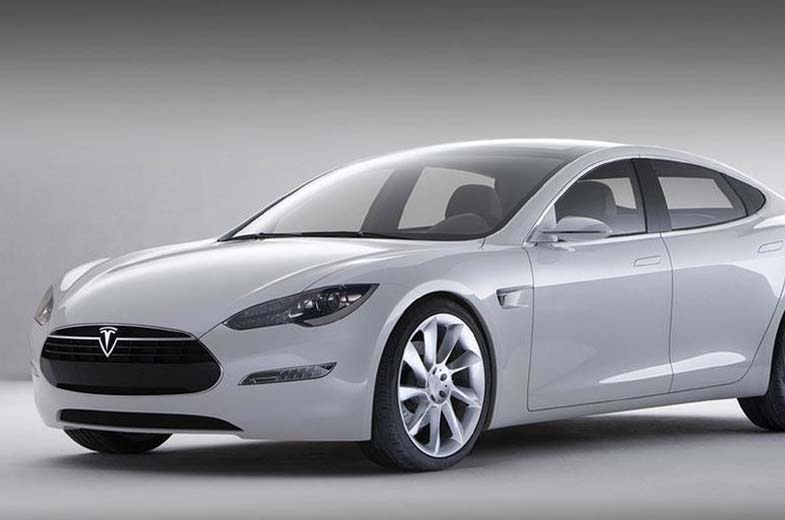
The Tesla Model S is a success story having won won numerous awards and recognition such as the 2013 World Green Car of the Year, 2013 Motor Trend Car of the Year, Automobile Magazine's 2013 Car of the Year, Time Magazine Best 25 Inventions of the Year 2012 award, Consumer Reports' top-scoring car ever. It’s an electric car that doesn’t compromise on drive quality or range, being able to transverse over 300 miles on one charge. This is the future.
With a whole floor of high concept sustainable transport options the Eco Technology Show will is proud to present the UK’s First showing of the BMW i8 – an incredible electric super car that has to be seen to be believed – see the culmination of over 120 years of automotive history and register for a free ticket today!


Facebook

Newsletter Signup

Be the first to know by signing up to our event updates.

* indicates required